By Carla Quispe, Peru Destination Expert, Lati Travel
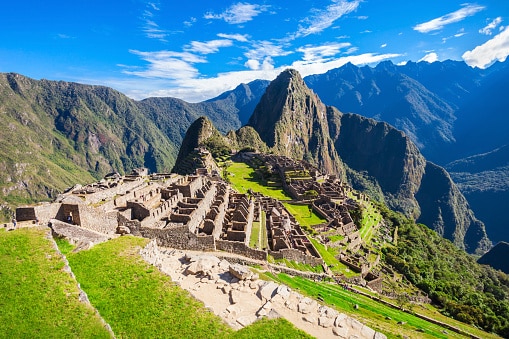
Machu Picchu at first light. Getting here early is the reward for planning ahead.
If you have five days to spend in southern Peru, a solid 5 day Cusco Machu Picchu itinerary will get you to the ruins, through the Sacred Valley, and back to Cusco with time to actually absorb what you’ve seen. This isn’t a quick selfie-and-go trip. Done right, five days gives you enough acclimatization time, room to explore Inca ruins beyond the postcard shot, and a proper sit-down meal in Aguas Calientes without watching the clock.
Key Takeaways
– 5 day in Cusco & Machu Picchu itinerary trip that includes Sacred Valley, Machu Picchu, and Cusco city sightseeing without feeling rushed.
– Acclimatization on Day 1 is not optional. Cusco sits at 3,400 meters (11,154 feet), and altitude sickness affects a significant portion of visitors.
– Machu Picchu entry requires advance timed tickets. Since 2023, the Peru Ministry of Culture has enforced strict daily visitor caps and designated circuits inside the site.
– Lati Travel’s single-city Peru package covers 5 days with professional guides, comfortable transportation, and hand-picked inclusions.
How to Structure Your 5 Day Cusco Machu Picchu Itinerary
The most common mistake American travelers make is flying into Cusco and heading straight to the ruins. Altitude sickness is real, and it does not discriminate by fitness level. The itinerary below front-loads a gentle acclimatization day so that by the time you reach Machu Picchu, you’re feeling strong rather than winded.
Day 1: Arrive in Cusco, Rest, and Explore Slowly
Your flight from the US will almost certainly route through Lima. LATAM and American Airlines code-shares connect Lima to Alejandro Velasco Astete International Airport (CUZ) in about 1 hour 20 minutes. Plan to land by early afternoon so you have time to settle in.
Spend Day 1 walking gently around the San Blas neighborhood and the Plaza de Armas. Both are within easy walking distance of most Cusco hotels and don’t require any steep climbing. Skip the alcohol and heavy meals on arrival night. Coca tea, widely available at every hotel and most cafes, is a traditional Andean remedy that many visitors find helpful for the first 24 hours.
I tell every group I guide: your Day 1 job is to do nothing remarkable. The ruins will be there tomorrow.
Day 2: Sacred Valley Full Day
The Sacred Valley sits roughly 300 meters lower than Cusco, so visiting on Day 2 keeps you at a kinder altitude while your body continues adjusting. A standard Sacred Valley day tour covers:
- Pisac market and ruins: The Thursday and Sunday markets are the most active, but the archaeological site above town is open every day.
- Ollantaytambo: This living Inca town is one of the few places in Peru where you can walk streets the Inca themselves laid out. The fortress terraces are steep, so a good night’s sleep from Day 1 matters.
- Lunch in Urubamba: Most full-day Sacred Valley tours include a buffet lunch at one of the valley’s agritourism restaurants.
Expect roughly 7 to 8 hours for the full day, with comfortable van transport from your Cusco hotel.
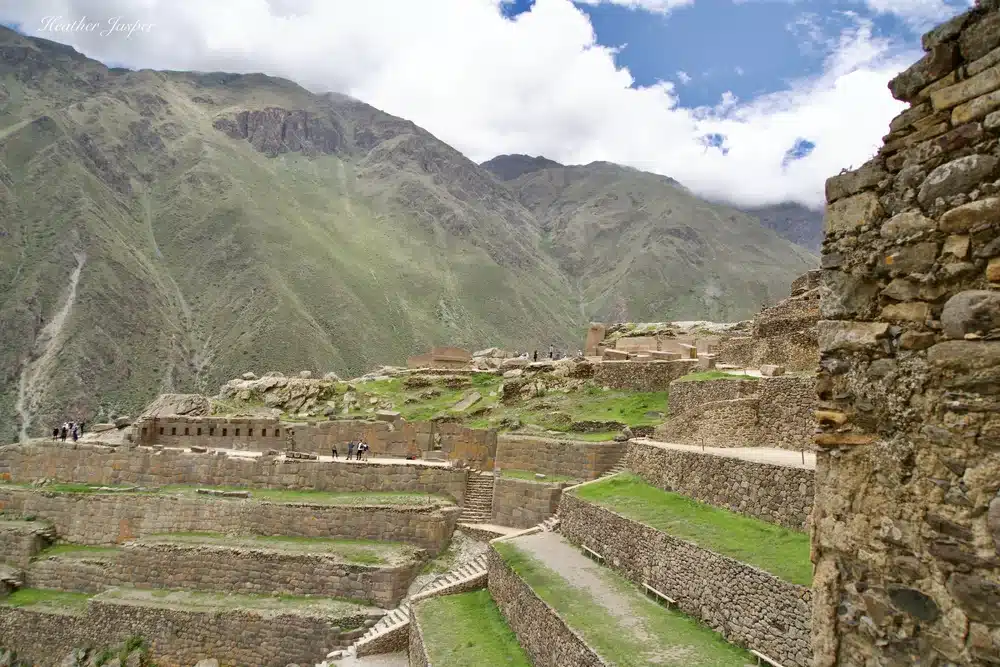
Ollantaytambo is one of the best-preserved Inca sites in Peru and a natural stop on any 5 day Cusco Machu Picchu itinerary.
Day 3: Train to Aguas Calientes, Afternoon in Town
Most travelers catch a morning train from Ollantaytambo (rather than Poroy near Cusco) to Aguas Calientes, also known as Machu Picchu Pueblo. PeruRail and IncaRail both operate this route, with journey times of about 1.5 to 2 hours through increasingly dramatic cloud-forest scenery.
Arrive in Aguas Calientes by midday, check in, and spend the afternoon at your own pace. The town has a decent food market, thermal baths, and a small local museum. Pick up any snacks or water for the next morning. Ticket gates at Machu Picchu open at 6:00 a.m., and the first buses from Aguas Calientes depart around 5:30 a.m., so an early bedtime on Day 3 is genuinely worthwhile.
Day 4: Machu Picchu
This is the day most people plan the entire trip around. Take the first or second bus up to beat the largest crowds. Your guide will walk you through your assigned circuit, covering the agricultural terraces, the Temple of the Sun, the Intihuatana stone, and the classic viewpoints.
On a typical guided visit, you’ll spend 3 to 4 hours inside the site. After that, you can choose to:
- Return to Aguas Calientes for lunch and a relaxed afternoon train back to Cusco.
- If your tickets include the Huayna Picchu or Montana mountain add-ons, factor in another 2 hours and a significant physical effort.
I guided a group of eight Americans in October 2024 who added the Montana circuit. Three of them had never done any significant hiking before. All three made it to the top and said it was the highlight of the trip, but they were genuinely glad we had spent Day 1 resting and not rushing straight to altitude. That acclimatization day made all the difference.
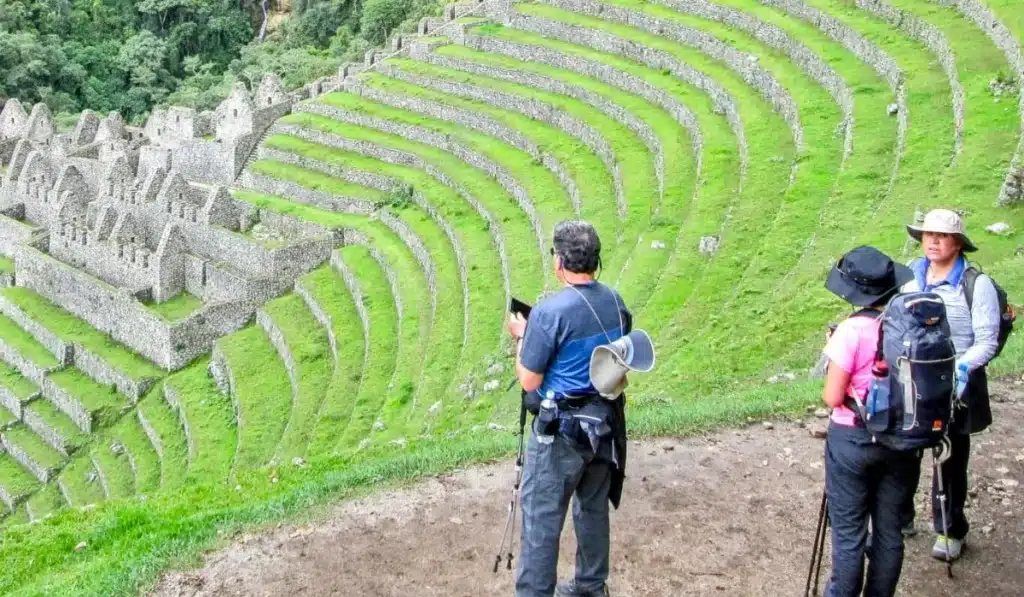
A guided morning circuit through Machu Picchu covers the most significant structures without the midday crowds.
Day 5: Cusco City Tour, Then Fly Out
Your last full day lands back in Cusco. A half-day city tour covers the four main sites efficiently: the Cathedral on the Plaza de Armas, Sacsayhuaman fortress just above the city, Qorikancha (the Temple of the Sun), and the artisan markets of San Blas. Most afternoon flights to Lima depart between 1:00 p.m. and 3:00 p.m., so a morning city tour fits the schedule well.
If your flight home is the following morning, use the extra afternoon to revisit your favorite Cusco neighborhood at a slower pace. San Blas has excellent ceramic studios and a handful of serious restaurants that are easy to miss on a rushed itinerary.
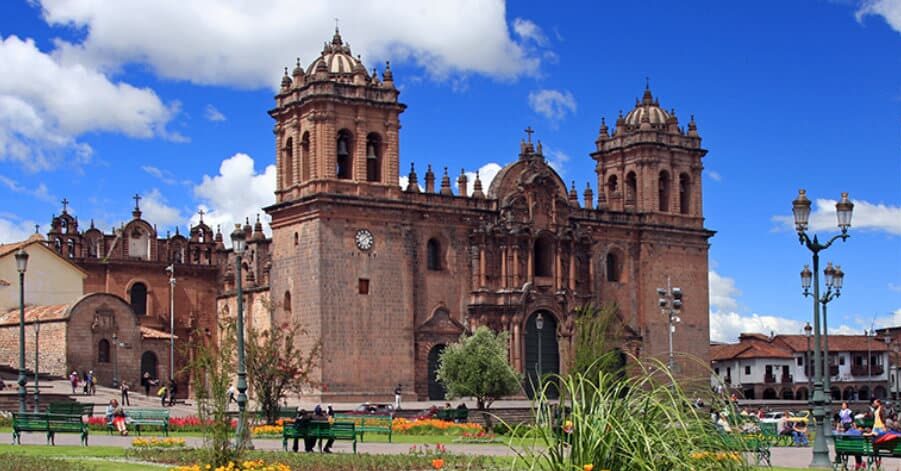
The Plaza de Armas in Cusco anchors Day 5 of any well-structured itinerary.
Practical Tips for Your 5 Day Cusco Machu Picchu Itinerary
Altitude and Health Preparation
Cusco’s elevation of 3,400 meters is the single biggest variable for travelers from sea-level cities. According to the CDC Yellow Book, acute mountain sickness (AMS) can affect anyone regardless of age or fitness, and symptoms typically begin within 6 to 12 hours of arrival at altitude. Talk to your doctor before departure about whether acetazolamide (Diamox) is appropriate for you.
Cusco receives the majority of its international visitors between June and August, when dry-season skies are most reliable. If you travel in the shoulder months of April, May, September, or October, you’ll find shorter lines at Machu Picchu and cooler temperatures that many visitors prefer.
When to Book Machu Picchu Tickets
This is the question I get more often than any other. Book your Machu Picchu tickets at least 6 to 8 weeks before your trip if you’re traveling June through August. In the shoulder season, 3 to 4 weeks is usually safe, but earlier is always better. Tickets purchased through the official Peru Ministry of Culture portal are non-transferable and tied to your passport number.
Packing for Five Days in the Cusco Region
The Cusco region has two very different microclimates within a short distance of each other. Cusco city and Sacsayhuaman can be cold at night (near freezing in June and July), while Aguas Calientes at 2,040 meters is noticeably warmer and more humid. Pack layers you can add and remove easily. Good walking shoes are more important than hiking boots for this itinerary unless you’re adding the Montana or Huayna Picchu climbs.
Frequently Asked Questions
Is 5 days enough for Cusco and Machu Picchu?
Five days is enough if you’re strategic about it. The itinerary above gives you one acclimatization day, one full Sacred Valley day, one travel day to Aguas Calientes, one full Machu Picchu day, and one Cusco city tour day. You won’t have time for add-ons like Rainbow Mountain or the Humantay Lake hike, but you’ll cover the core experience without feeling like you’re sprinting through it.
What circuit should I choose at Machu Picchu?
For most first-time visitors, Circuit 2 (the classic lower route) gives you the best combination of iconic viewpoints and landmark structures, including the Temple of the Sun, the Intihuatana, and the agricultural terraces. If you want to add a mountain hike, Machu Picchu Mountain (Montana) is more accessible than Huayna Picchu and offers a wider panoramic view of the entire site from above.
Do I need a guide at Machu Picchu?
A guide is not legally required for independent ticket holders, but it significantly changes the experience. The site has very little interpretive signage in English, and without context, the stone structures can be hard to read. Licensed guides explain the astronomical alignments, the agricultural engineering, and the social structure of the Inca city in ways that make the visit far more meaningful. Lati Travel’s Cusco packages include a licensed, English-speaking guide throughout.
What is the best time of year for this itinerary?
The dry season from May to October is the most popular window, with June, July, and August being the peak months. Skies are reliably clear, which matters at Machu Picchu where morning clouds can obscure the view. The trade-off is higher prices and more competition for tickets. April, May, September, and October offer a good balance of dry weather and manageable crowds.
,
Ready to visit Cusco and Machu Picchu? Browse our Cusco Machu Picchu tour packages and find the right itinerary for your travel style, whether that’s a guided 6-day package or a custom multi-city Peru journey. Contact us