Iguazu Falls Itinerary: How to See Both Sides in 3 Days
By Sofia Ramirez, Buenos Aires Destination Expert, Lati Travel
Sofia has been guiding travelers through Buenos Aires for the past decade. Born in San Telmo, she leads Lati Travel’s city tours and is our go-to for anything tango, food, or neighborhood culture.
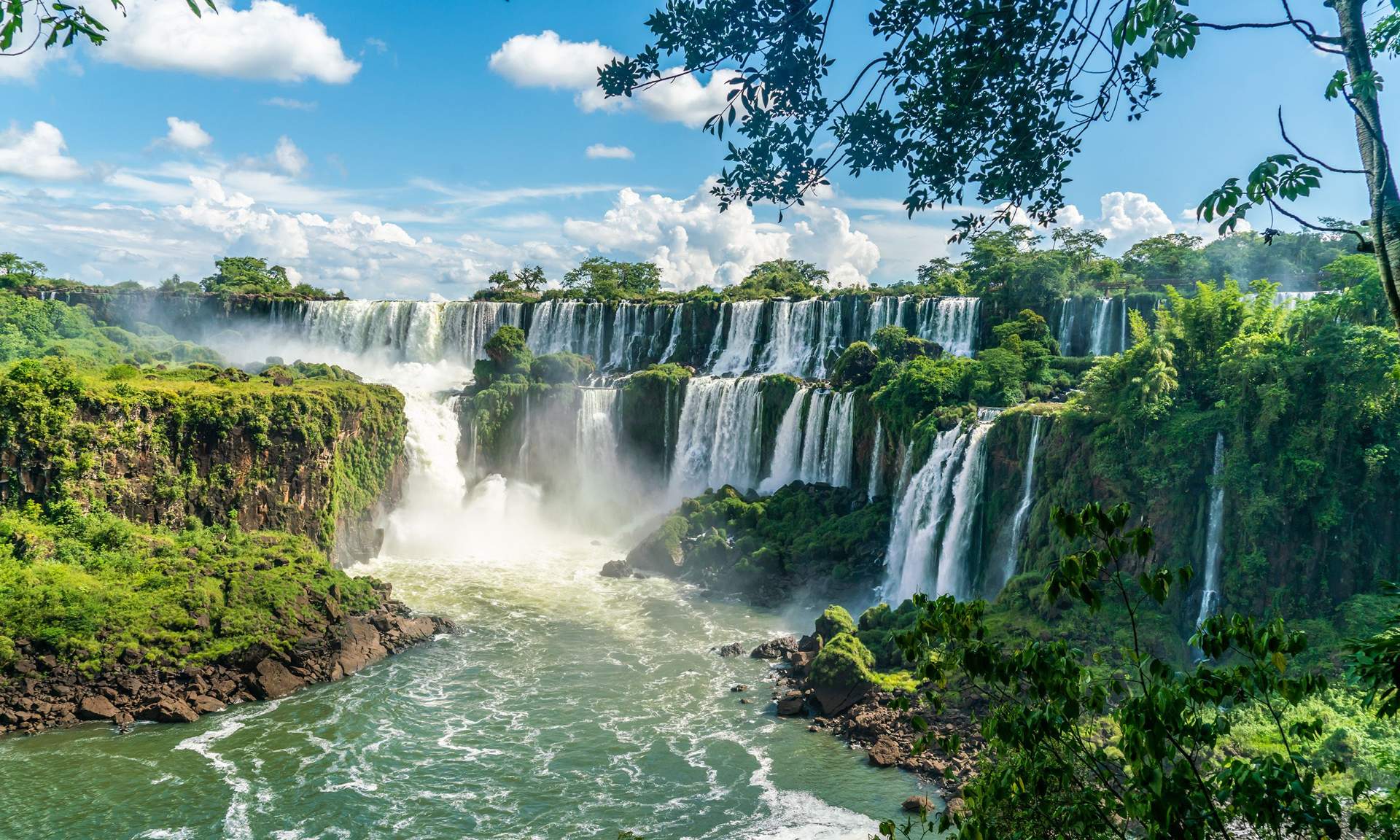
A solid Iguazu Falls itinerary is the difference between leaving in awe and leaving exhausted, having missed the one thing everyone else raves about. Iguazu is not a single waterfall. It is a system of 275 individual cascades stretching nearly 2 miles across the Argentina-Brazil border, and figuring out how to divide your time between both sides, what to prioritize, and how to handle it with kids in tow, takes real planning. This guide covers exactly that: three days, three non-negotiable activities, and clear advice on which side to tackle first.
Key Takeaways
– Iguazu Falls spans 275 cascades across Argentina and Brazil, making it one of the largest waterfall systems on earth, and you genuinely need at least two full park days to appreciate both sides.
– The Argentine side requires the most time (half a day minimum just for the Lower Circuit plus Garganta del Diablo), so most local guides recommend starting there.
– Cross-border day trips to the Brazilian side are fully legal for US and Canadian passport holders without a visa, confirmed via the Brazilian Consulate General.
– Lati Travel’s Buenos Aires tour packages can be extended to include Iguazu, giving you a single itinerary with concierge logistics instead of booking six separate vendors.
Why Your Iguazu Falls Itinerary Needs at Least 3 Days
Most travelers flying in from Buenos Aires land at Cataratas del Iguazu International Airport (IGR) and assume one full park day will cover everything. It will not. The Argentine side alone has three separate circuits, a boat excursion, and a train ride. The Brazilian side adds a completely different perspective that makes the Argentine experience make more sense in retrospect.
Three days is the sweet spot for a first visit:
- Day 1: Argentine side, Lower and Upper Circuits
- Day 2: Argentine side, Garganta del Diablo (Devil’s Throat) plus the boat experience
- Day 3: Brazilian side, panoramic walkway, and optional Itaipu Dam visit
If you only have two days, drop Day 3 and do the Brazilian side in the morning of Day 2 before returning to Argentina. You will be rushing, but it is doable.
Which Side of Iguazu Falls to Visit First
This is the most common question we get from clients before they depart, and the answer is almost always: start with the Argentine side.
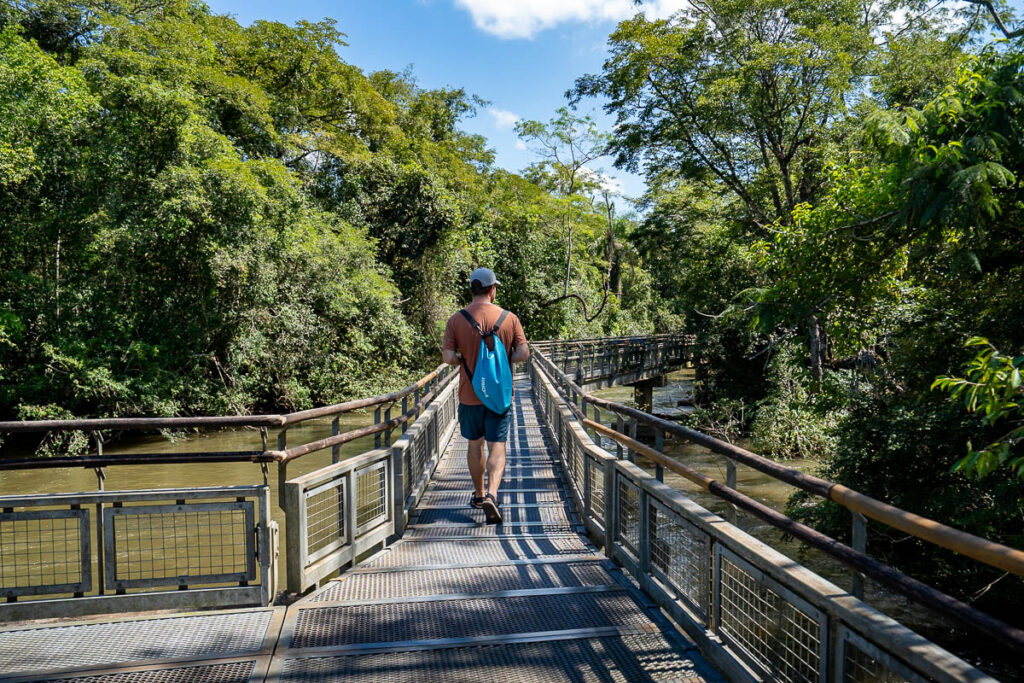
Here is the logic. The Argentine side puts you inside the falls. The walkways bring you within arm’s reach of individual cascades. You walk through jungle, cross metal catwalks over rushing water, and at Garganta del Diablo, you stand at the edge of the most powerful single drop in the entire system. It is immersive and physically close.
The Brazilian side, by contrast, gives you the wide-angle view. A single 1.2-kilometer paved walkway runs parallel to the falls and delivers the full frontal panorama that makes Iguazu look the way it does in every magazine photo. It is stunning, but it is a finishing shot, not an opening one.
If you do Brazil first, the Argentine side can feel anticlimactic because you are going from a grand view down to close-up details. Go Argentine first, get soaked and overwhelmed by the proximity, and then let the Brazilian panorama put everything into context. The emotional arc works much better.
3 Non-Negotiable Activities for Your Iguazu Falls Itinerary
1. Walk the Full Lower Circuit on the Argentine Side
The Lower Circuit (Circuito Inferior) is a loop of roughly 1.7 kilometers through the Argentine park that takes you down to river level and close to multiple falls including Salto Dos Hermanas, Salto Bossetti, and Salto San Martin. Plan two hours minimum, more if you stop for photos, which you will.
This circuit is also the most accessible in the park. Wide paved paths and ramps make it manageable for strollers, wheelchairs, and travelers who prefer a gentler pace. The Argentine National Parks Administration has invested consistently in accessibility infrastructure since 2022, and the improvements are visible throughout.
One tip from our operations team: arrive at the park gates before 9 a.m. The Lower Circuit becomes noticeably crowded between 10 a.m. and 2 p.m., especially during Argentine school holiday periods in January and July.
2. Reach the Garganta del Diablo Platform
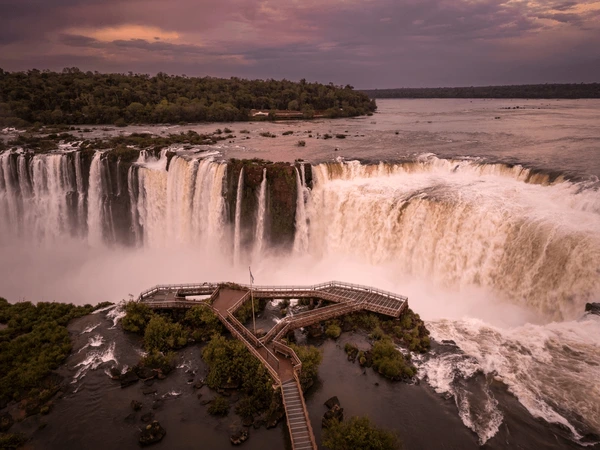
Garganta del Diablo, or Devil’s Throat, is the centerpiece of the Argentine side and the reason Iguazu consistently ranks above Niagara and Victoria Falls in sheer spectacle. It is a U-shaped chasm where 14 separate waterfalls converge into a single roaring drop of roughly 80 meters. You take the park’s Tren Ecologico (Ecological Train) to the trailhead, then walk a boardwalk over the Iguazu River to reach the overlook platform.
You will get wet. Not spray-misted, but genuinely soaked. Pack a light rain poncho, keep your phone in a waterproof case, and wear shoes you do not mind waterlogging. Our guides started recommending dry bags to clients in early 2023 after several people lost phones to the mist at the platform. That single piece of advice now goes in every pre-departure briefing we send.
After Garganta, consider booking the Gran Aventura boat excursion operated inside the national park. The boat drives directly under the falls. It is a 10-minute experience that produces more laughter than almost anything else we have seen in years of running tours here. Children love it, and so do most adults who were initially skeptical.
3. Cross to the Brazilian Side for the Full Panorama
The Brazilian side of Iguazu Falls sits inside Iguacu National Park in the state of Parana. The main walkway is paved and largely flat, making it one of the more accessible international natural attractions in South America. US, Canadian, UK, and Australian passport holders do not need a visa for Brazil for stays under 90 days, per current Brazilian entry requirements.
The panoramic view from the Brazilian walkway is the photograph. Every wide shot of Iguazu that you have seen online was taken from this side. Plan two to three hours, longer if you add the optional Macuco Safari boat or the Itaipu Dam visit nearby.
One practical note: bring both Argentine pesos and Brazilian reais, or a card with no foreign transaction fees. The two parks operate entirely separate admission systems, and the Brazilian side does not accept Argentine currency.
Practical Tips Before You Finalize Your Iguazu Falls Itinerary
Best time to visit: The Argentine Ministry of Tourism reports that water volume at Iguazu peaks between November and March following the rainy season, which means more dramatic falls but also higher humidity and occasional trail closures. April through June offers lower crowds and comfortable temperatures without sacrificing too much volume. July and August are peak Argentine domestic holiday season, so expect crowds at the park.
Health considerations: The CDC Yellow Book recommends hepatitis A vaccination for all travelers to Argentina and Brazil, and advises checking current recommendations for yellow fever depending on your itinerary. The Iguazu area is in a subtropical region, so mosquito repellent (DEET-based) is recommended year-round.
Getting around: Puerto Iguazu town is the base for most international visitors. Taxis and shuttle services connect the town to both park entrances. The Argentine park entrance is roughly 18 kilometers from town; the Brazilian entrance requires crossing the international bridge, which taxis handle routinely.
Photography tip: Shoot Garganta del Diablo in the morning when the light comes from the east and the mist has not yet built up into a wall. The Brazilian side photographs best in the afternoon when the sun is behind you from the west.
Frequently Asked Questions
How many days do you really need for an Iguazu Falls itinerary?
Three days is the minimum to do both sides properly without feeling rushed. Two days is possible if you prioritize the Argentine side and do a half-day on the Brazilian side, but you will miss some circuits. One day is not enough, period, unless you are physically unable to extend your trip.
Do I need a visa to cross from Argentina to Brazil at Iguazu?
US, Canadian, UK, and Australian passport holders do not need a visa for Brazil for tourist stays under 90 days, as of current Brazilian entry requirements. You will need your passport (not just a US ID) at the border crossing. Always confirm current requirements with the Brazilian consulate before travel, as policies can change.
Is Iguazu Falls safe for families with young children?
Yes. Both parks have stroller-accessible paths, and the Argentine Lower Circuit is specifically well-suited for families. The Gran Aventura boat is safe for children (life jackets are provided), though the soaking factor means you should pack a change of clothes for the kids. Keep children close at the Garganta del Diablo platform, where the mist, noise, and crowd density can be disorienting for small children.
Can I visit Iguazu as a day trip from Buenos Aires?
Technically yes, but it is not recommended. The flight from Buenos Aires is roughly two hours, and with transfers and park logistics you would have maybe four to five hours inside the Argentine park. You would miss the Brazilian side entirely and leave without seeing Garganta del Diablo properly. A three-night trip is the right call for anyone traveling from overseas.
Ready to explore Iguazú Falls? Browse our tours and packages and let a local guide show you the city the way it deserves to be seen: Packages to Iguazú Falls