
Practical · 7 min · · by Sofia Ramirez
The best time to visit Argentina depends on where you go
Short answer
What is the best time to visit Argentina?
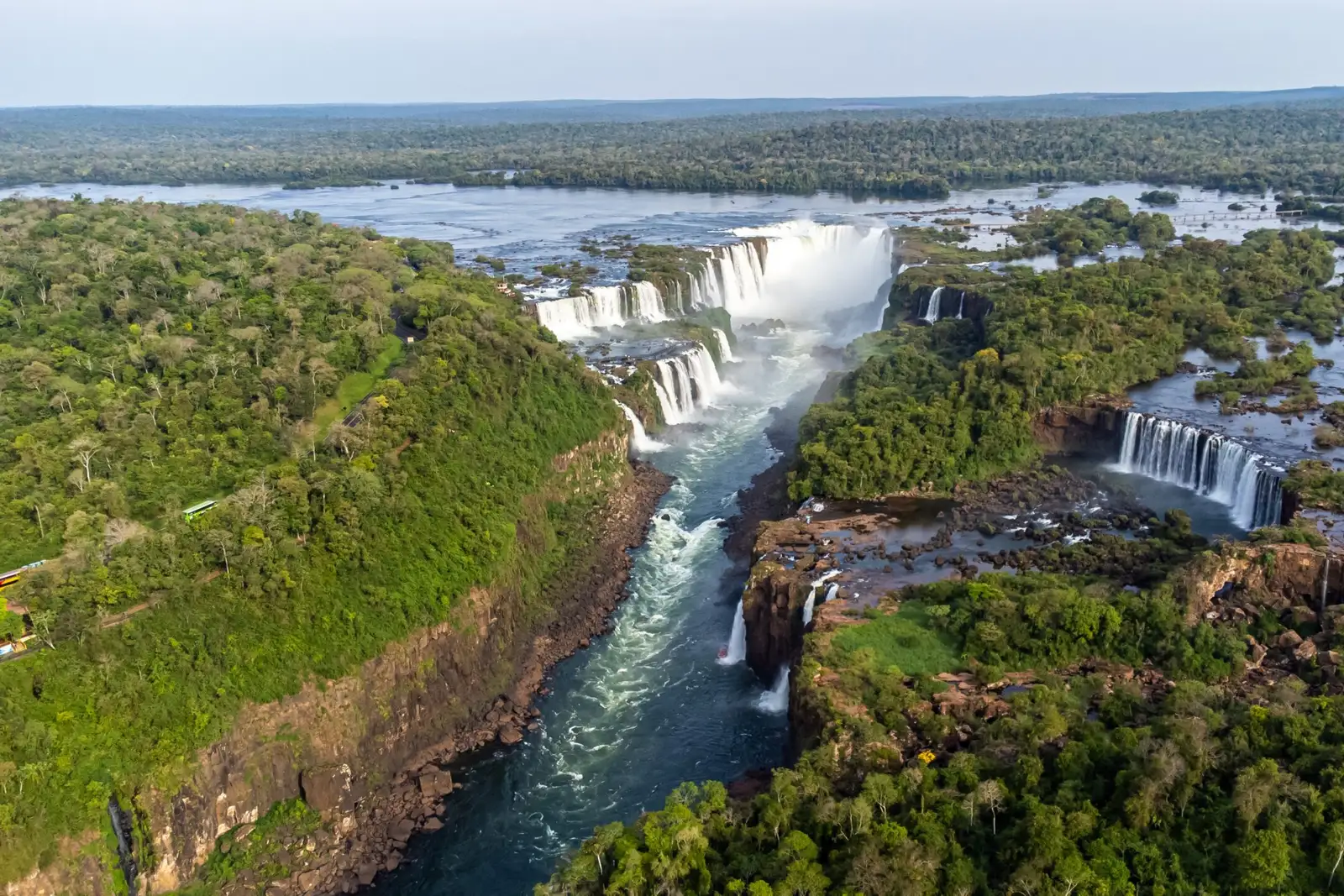
There is no single best time to visit Argentina, because the climate shifts completely between its subtropical north and sub-Antarctic south. Iguazu Falls stays warm most of the year, Mendoza's grape harvest runs February to April, and Patagonia's trekking season is November to March. Argentina's seasons are also reversed from the Northern Hemisphere: summer runs December to February.
What this guide covers
- Argentina's seasons are reversed, and that is the first mistake
- The best time to visit Argentina in the north: Iguazu and Salta
- Buenos Aires and the centre, by month
- Mendoza's harvest window, and why it does not line up with the rest
- Patagonia runs on its own calendar
- The best time to visit Argentina if you are covering more than one region
Key Takeaways
- Argentina’s seasons run opposite the Northern Hemisphere. Summer runs 21 December to 20 March, and winter runs 21 June to 20 September, per Argentina’s foreign ministry.
- Puerto Iguazu, in the subtropical north, averages 26.4°C in January and 16.8°C in July, with rain most months. Salta, also in the north but at altitude, averages a cooler 22.2°C in January and 11.4°C in July and stays dry outside summer.
- Buenos Aires runs a real four-season year: 25.2°C in January against 11.5°C in July. Rain spreads across the year instead of piling into one season.
- Mendoza’s grape harvest runs February to April. See Mendoza wine tour planning for the exact dates, the harvest festival, and how many wineries fit in a day.
- Patagonia’s best trekking months are November and March, not the summer peak. See when to go to Patagonia for the month-by-month breakdown and what actually closes in winter.
- Argentina runs more than 4,300km from north to south. Buenos Aires to Ushuaia alone is a 2,360km, 3h35m non-stop flight, which is why most itineraries pick two regions rather than four.
Argentina’s seasons are reversed, and that is the first mistake
Argentina sits in the Southern Hemisphere. Its calendar runs opposite to North America and Europe. Summer runs 21 December to 20 March, autumn 21 March to 20 June, winter 21 June to 20 September, and spring the rest of the year, according to Argentina’s own foreign ministry. Book a trip around “the summer holidays” in the Northern Hemisphere sense, and it lands in Argentine winter instead.
The country also spans more than one climate. The same official source describes the Litoral in the north-east as subtropical, Buenos Aires as templado y húmedo (temperate and humid), Cuyo around Mendoza as arid with many sunny days, and Patagonia as cold, humid and windy. That range is the whole reason “best time to visit Argentina” has no single answer. The month that suits Iguazu Falls can be wrong for Ushuaia in the same week.
The best time to visit Argentina in the north: Iguazu and Salta
Iguazu Falls and Salta both sit in the north. Both get called “warm”. Their climates still work differently. Puerto Iguazu is subtropical and humid. It averages 26.4°C in January and still 16.8°C in July, with rain falling in every month: driest in August at 84mm, wettest in October at 247mm. There is no dry season at the falls, only a season with heavier rain.
Salta sits further west, at altitude, and runs cooler and far drier. It averages 22.2°C in January and 11.4°C in July. Annual rainfall is 740mm, and almost all of it falls in summer: January brings around 197mm, August as little as 2.3mm. Winter gives clear, dry days with cool nights. Summer gives green hills and afternoon storms.
Iguazu works in almost any month. Salta rewards picking a season on purpose, dry or wet, rather than showing up in whatever month suits the rest of the trip.
Buenos Aires and the centre, by month
Buenos Aires runs the four-season year most visitors expect, just on the reversed calendar. January averages 25.2°C, and July averages 11.5°C. Annual rainfall is 1,260mm, and it spreads across the year rather than piling into one wet season: January is the wettest month at 134mm, June the driest at 62mm.
That spread matters more than the totals. No month in Buenos Aires rules out a trip on rain alone, and no month guarantees dry days either. Spring (September to November) and autumn (March to May) sit in the mild middle, past the January heat and short of the July chill. Those are the months locals pick for their own city breaks.
Mendoza’s harvest window, and why it does not line up with the rest
Mendoza sits in Cuyo, which the foreign ministry describes as arid, with few rains and many sunny days. It also runs a wider temperature swing than Buenos Aires: 8.5°C in July against 26°C in January. But temperature is not the number that decides when to go. Harvest is.
Grape harvest, or vendimia, runs roughly February through April. The city fills up for the Fiesta Nacional de la Vendimia in the first week of March. Our dedicated Mendoza wine tour planning guide covers those dates in full, plus how many wineries realistically fit into a day and which valley suits a first visit. If wine is the point of the trip, that guide decides the month. This one just flags that Mendoza’s calendar does not follow Buenos Aires’s or Patagonia’s.
Patagonia runs on its own calendar
Patagonia is the region where “best time to visit Argentina” breaks down completely. The foreign ministry sums it up as cold, humid and windy, and the right month depends on which town. Ushuaia averages 10.3°C in January and 2.3°C in June, with a modest 460mm of rain a year spread across roughly 99 days rather than falling hard in any single month.
What matters most for planning is not the average temperature. It is what opens and closes. Most of the trekking around El Chaltén shuts for winter. Bariloche runs the opposite pattern and fills up for its ski season in July and August. Our when to go to Patagonia guide covers that month by month, including why November and March beat the December to February peak on more than price, and what the Perito Moreno glacier’s published opening hours actually are in winter.
The best time to visit Argentina if you are covering more than one region
Argentina runs more than 4,300km from north to south, per its own foreign ministry, and that distance is the real constraint on an itinerary, not just the climate. Buenos Aires to Ushuaia is roughly 2,360km, a 3h35m non-stop flight. Buenos Aires to Puerto Iguazu is a shorter hop, under two hours non-stop, per flight-time data from Travelmath. Both are flights, not drives.
That size is why most trips pick two regions, not four. A week covers Buenos Aires plus one of Iguazu, Mendoza or a Patagonian base without rushing. Add a second internal flight, and it starts eating the days meant for the destination itself. November and March keep the most doors open at once: Patagonia’s trekking season is still running, Buenos Aires sits in its mild shoulder months, and neither the summer crowds nor the winter closures have set in.
Buenos Aires is also where almost every Argentina trip starts or ends. A half-day there is worth building in regardless of season. Lati’s Best of Buenos Aires city tour covers Recoleta, Plaza de Mayo and Caminito in five hours, timed to fit around an arrival or a connecting flight rather than take up a full day on its own.
Places in this guide
Frequently asked
Is Argentina's summer the same months as the US or Europe's summer?
No. Argentina is in the Southern Hemisphere, so summer runs December to February and winter runs June to August, the opposite of the Northern Hemisphere. A trip booked for 'July summer holidays' lands in Argentine winter.
Can you visit Iguazu Falls and Patagonia on the same trip?
Yes, but not comfortably in the same week. The two sit at opposite ends of the country with very different climates, and each deserves its own multi-day stop rather than a rushed add-on.
What is the rainy season in Argentina?
It depends on the region. Puerto Iguazu has no real dry season and gets rain year-round, driest in August. Buenos Aires spreads its rain fairly evenly, and Salta's rain concentrates almost entirely in the summer months.
Is there a month that works well across most of Argentina?
November and March come closest: both sit outside the summer crowds and the winter closures, and both keep Patagonia's trekking season open while Buenos Aires and the north stay comfortable.