
Practical · 6 min · · by Sofia Ramirez
Paying in Argentina: cards, cash and the 21% refund
Short answer
Should tourists pay by card or cash in Argentina?
Paying in Argentina is simplest with a foreign card: it settles at the financial rate and it is the only way to get the 21% hotel VAT back. Cash in pesos is for taxis, tips and market stalls. Carrying dollars to change on the street stopped being the clever move when the controls came off.
What this guide covers
- Which rate you actually get
- The 21% hotel VAT refund, and how to lose it
- Tipping norms by service
- ATMs and withdrawal limits
- What to pre-pay before you fly
Key Takeaways
- Pay for hotels with a card issued outside Argentina. The 21% VAT comes back to you; pay the same bill in cash and it does not.
- Foreign cards and foreign wallets settle at the financial rate, so the card is no longer the expensive option it was for years.
- The old trick of bringing US dollars to change on the street lost its point when the controls came off. The gap it exploited has narrowed.
- Carry small notes for taxis, markets and tips. Splitting a large note in a market is its own errand.
What paying in Argentina looks like now
For most of the last decade there were two prices in Argentina: the one your card gave you and the one cash gave you. Advice written in that era is still all over the internet, and following it now costs you money rather than saving it.
Two things changed. The exchange controls came off, including the US$200 monthly cap that defined the era, and the peso now floats inside a band that the central bank adjusts each month against INDEC inflation.
At the same time, payments made with a card or a wallet held outside the country settle at the financial dollar rate rather than the old official one. That is the rate the street was competing with. It is now the rate you get for tapping a card.
So the practical answer inverted. Card first, cash for the gaps.
The 21% you get back, and how people lose it
This is the part almost nobody arrives knowing, and it is worth more than any exchange-rate arithmetic.
Argentina refunds the VAT on accommodation to foreign tourists. VAT here is 21%, it covers the room and the breakfast when breakfast is included in the rate, and it applies whether you booked the hotel directly or through a licensed agency.
There is one condition, and it is absolute: the payment has to come from abroad. A credit or debit card issued outside Argentina, or a transfer from a foreign account. Pay the same hotel bill in cash, in pesos or in dollars, and the refund does not exist. The hotel is not being difficult; the rule says so.
What this looks like in practice: the hotel issues a class “T” invoice instead of a normal one, and the VAT either comes off the bill or returns to the card. Ask at check-in whether they operate the scheme. Any hotel that takes foreign guests will know what you mean.
On a two-week trip, that refund is usually the largest single saving available to a visitor, and it is invisible to anyone paying cash to avoid card fees.
Paying in Argentina: what to actually carry
A card, for everything that takes one. Hotels, restaurants, supermarkets, museums, long-distance buses, our own 3-day Buenos Aires package. Contactless is normal in the cities.
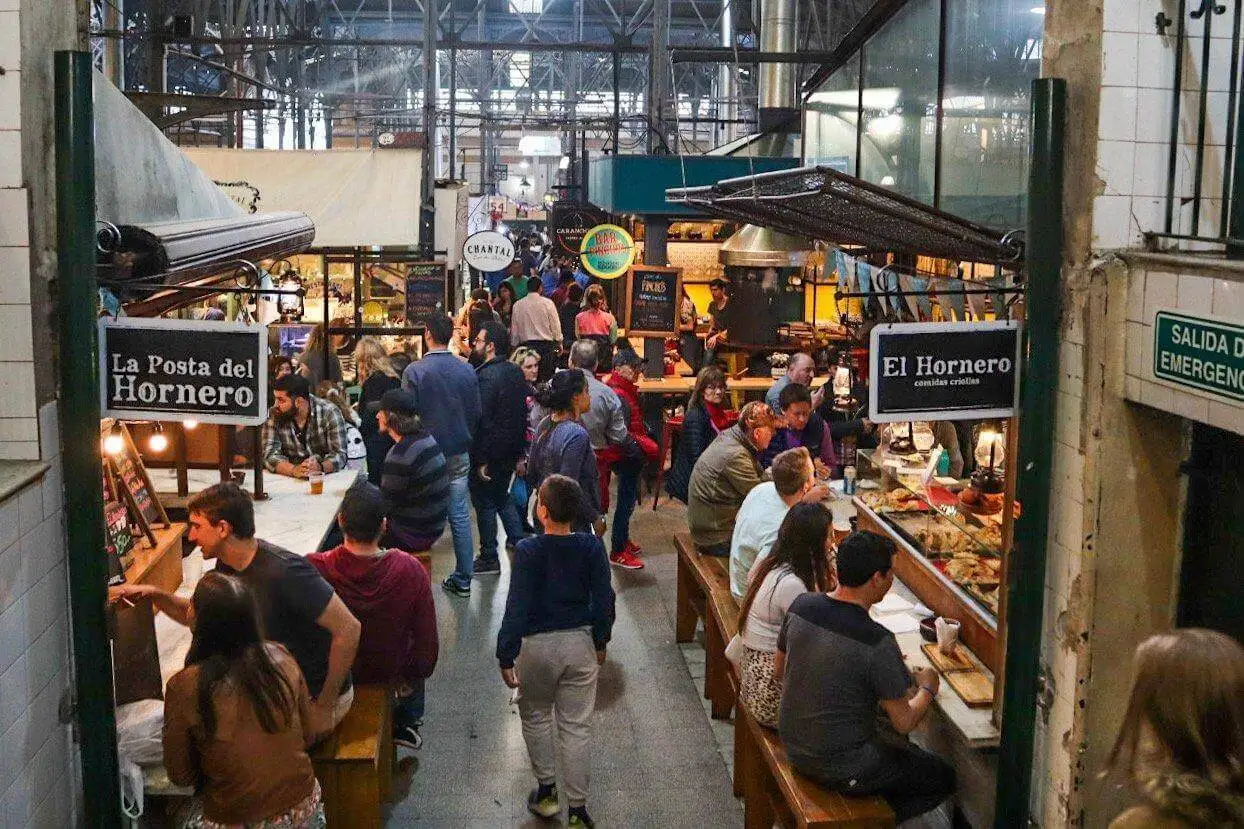
Pesos in small notes, for the rest. Street taxis, the odd cafe with a broken terminal, market stalls in San Telmo, tips, and the man who watches the cars. A thousand-peso note in a fruit stall is a negotiation.
A little cash in reserve. Not thousands. Enough for a day if a card is swallowed or a terminal is down.
You have to declare cash or monetary instruments of US$10,000 or more when you arrive, and a family group can pool the allowance. Nobody visiting for a fortnight needs to go near that number.
ATMs, and why they are the annoying part
Argentine ATMs dispense small amounts and charge for it. Withdrawal caps are set per machine and per bank, they are low by European or North American standards, and the fee is a flat one, so a small withdrawal is punished twice.
Two habits make it tolerable. Take the maximum the machine allows rather than the amount you need, and use an ATM inside a bank branch during opening hours, so a swallowed card is a conversation rather than a lost afternoon.
If your bank refunds foreign ATM fees, this is the trip to use that account on.
The one question the terminal will ask you
When you tap a card, some terminals offer to charge you in your own currency instead of pesos. It is presented as a convenience and it is the most expensive button on the machine.
Always choose pesos. The terminal’s own conversion carries a spread that the shop keeps a slice of, and it replaces your bank’s rate with a worse one. Your card issuer will convert it anyway, at a rate you can look up.
The same applies to hotels offering to bill you in dollars, and to airline websites that guess your country. Pesos on the ticket, your bank does the rest.
Tipping, without overthinking it
- Restaurants: 10%, in cash if you can, because it reaches the staff more reliably than a line on the card slip.
- Cafes and bars: round up, or leave the coins.
- Private guide: US$5 to US$10 per person per day is normal and generous.
- Driver on a transfer: small change is enough. It is not expected.
- Hotel housekeeping: a note per night, left in the room.
There is also the cubierto on a restaurant bill: a small per-person cover charge for bread and table service. It is not a tip and it is not a scam, it is a line item, and it does not replace the 10%.
What to sort before you fly
Tell your bank you are travelling, so the first transaction does not get blocked. Take two cards from two different networks. Download the currency in your banking app if it supports it, and check whether your card charges a foreign transaction fee, because that fee is now the only spread you are paying.
Then stop optimising. The days when Argentina rewarded a complicated money strategy are over, and the money you save with one is smaller than the 21% you get for paying the hotel with the card in your pocket.
For what a few days in the city actually costs, things to do in Buenos Aires under 100 dollars prices a week of it, and the Caminito guide covers the one neighbourhood where cash still matters most.
Places in this guide
Frequently asked
Do you need cash in Buenos Aires?
Some. Markets, small cafes and street taxis prefer it. Everything else takes cards, and hotels should be paid by card so the VAT comes back.
How much should you tip?
10% in restaurants, small change for a guide's driver, US$5-10 per day for a private guide.
Can you still get a better rate with cash dollars?
Not reliably. The exchange controls came off, so the gap that made street changing worthwhile has narrowed, and a card settles at the financial rate without the risk.
How much cash can you bring in?
You have to declare cash or monetary instruments of US$10,000 or more on arrival. Below that there is no declaration, and no reason to carry it.